

Courses for Parents, Family Members, Resource Families, & Caregivers
Gain critical insight into children’s behavior and how to respond effectively. Learn how to help children through changes and challenges that life can bring to a child’s, adolescent’s, or adult’s life. With resources and information rooted in science, including psychology and human development, parents expand their understanding of the many factors that shape adults’ and children’s behavior and needs. Adults who complete Child Wellness classes gain the knowledge to become effective supporters or advocates for children in the community facing adversity or recovering from trauma.
NOCE Child and Family Wellness Courses
Learn to nurture hope and also help children build skills that reduce the negative effects of adversity. Learn ways to care for yourself as a parent and also care for children (and young adult children) in the best possible ways.
Child and Family Wellness course features:
- 6 to 8 weeks to finish most classes
- Classes start at various dates throughout the year
- Online classes are flexible, without scheduled meeting times (asynchronous)
- Hybrid classes include weekly in-person meetings
- Tuition-free noncredit classes offered by NOCE are included on the students’ transcript and enrollment verification to have evidence of parenting skill-building and knowledge
Child Wellness (BTIC) Courses and Achievement Award Criteria
-
Connected Parenting (PARN 102)
PARN 102
With focus on strengthening caregiver-child connections, essential methods in helping children regulate their emotions,
improving feelings of safety and security, and decreasing challenging behaviors, this course provides simple, research-based techniques for every parent who wants to build a life-long positive relationship with their child. -
Connected Parenting: Early Childhood and Infancy (PARN 301)
PARN 301
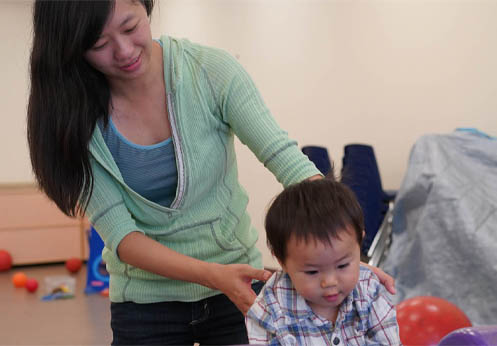
This course assists parents and caregivers in learning the importance of connection (attachment and bonding) as the building blocks to infant/early childhood social emotional and cognitive development. The focus is on exploring ways parents and caregivers can provide responsive and attuned care while increasing lifelong resilience for their children.
-
Understanding Adverse Childhood Experiences – ACEs (PARN 300)
PARN 300
Learn about the effects of childhood adversity, toxic stress, and the impact on health and well-being. Explore methods to help address your personal history so you can provide attuned, nurturing care. Effects of early trauma can be prevented or reversed through healthy relationships. Learn how to promote wellbeing and resilience in children and ourselves.
-
Foster, Kinship, and Adoptive Families (PARN 302)
PARN 302
This course is created for foster, adoptive and kinship parents to assist in learning the importance of connection (attachment and bonding) as the building blocks to social-emotional and cognitive development. The focus is on exploring ways parents can provide responsive and attuned care while increasing lifelong resilience for children.
-
Strengthening Families (PARN 303)
PARN 303
Discover the characteristics needed for healthy environments and relationships in the home while recognizing the uniqueness of each family dynamic. Learn the importance of caring for yourself while also providing the stability needed to meet the physical and emotional needs of the children in your life.
-
Mental Wellness in the Home (PARN 304)
PARN 304
Get an overview on mental health to have more awareness and understanding. Explore factors that influence mental health at home, protective measures, and skills needed to aid in healthy coping and regulation strategies for family members and youth in the community. Help make vibrant, healthy communities a priority.
-
Effects of Trauma on LGBTQ+ Youth (PARN 305)
PARN 305
Improve your understanding of LGBTQ+ people, terminology, and stressors/traumas that potentially impact youth. Gain insights that advance your awareness of the challenges faced by LGBTQ+ youth. Learn to use simple tools to break down barriers and build safety and well-being for everyone.
-
Safeguarding Vulnerable Populations (PARN 306)
PARN 306
Learn about human trafficking from the perspectives of those working in the anti-trafficking movement. Increase awareness in your home, school, and community. To aid in prevention and protection of youth who experience social media and other influences, explore definitions, risk factors, and build skills to spot red flags, prevent trauma, and aid youth. The prevalence of trafficking in Orange County is presented. This is a difficult issue, but solutions are within reach.
-
Internet Safety and Awareness (PARN 307)
PARN 307
Gain awareness and understanding of the online world and how it works. The benefits and risks associated with the Internet will be explored along with the tools needed to help children stay safe while they engage in technology use.
-
Understanding Addictive Behaviors (PARN 308)
PARN 308
Increase understanding and awareness about addiction and how it impacts individuals and families. Definitions of addiction are explored, as well as the connection between trauma and addiction. Students explore the importance of connection and relationship as a preventative and protective measure.
-
NEW! Navigating Loss: Supporting Families Through Grief and Change (PARN 355)
Learn about the many ways in which grief and loss can appear in the lives of parents and children. This course offers strategies on how adults can support themselves as well as those they care for as they navigate common changes and challenges that occur throughout parenthood.
-
Why are Child Wellness classes offered at community locations like local schools?
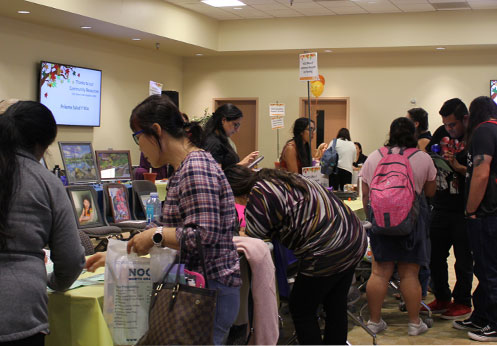
Many local K-12 schools offer supportive learning spaces for parents. Conveniently located throughout NOCE’s service areas, local elementary school or high schools are often a convenient location for parents to gather.
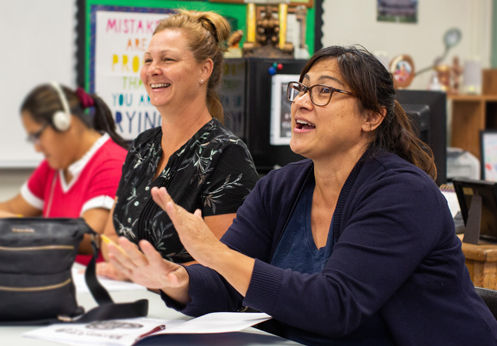
Parents who enroll in NOCE’s hybrid Child Wellness classes also build connections and enjoy being part of a supportive learning community with other dads, moms, grandparents, aunties, uncles, resource families. Weekly in-person class meetings allow the opportunity for adults to learn together, discuss key concepts, and practice practical parenting skills in-person.
-
Achievement Award in Parenting: Child Wellness/Building Trauma-Informed Communities (BTIC)
A Parenting Program achievement award can be earned by passing four total courses in the Building Trauma-Informed Communities/Child Wellness track, including one required fundamental course:PARN 300: Understanding Adverse Childhood Experiences (required)Plus, the student’s choice of three more courses from these options:PARN 102: Connected ParentingPARN 301: Connected Parenting: Early Childhood and InfancyPARN 302: Foster, Kinship, and Adoptive FamiliesPARN 303: Strengthening FamiliesPARN 304: Mental Wellness in the HomePARN 305: Effects of Trauma on LGBTQ+ YouthPARN 306: Safeguarding Vulnerable PopulationsPARN 307: Internet Safety and AwarenessPARN 308: Understanding Addictive BehaviorsPARN 355: Navigating Loss: Supporting Families Through Grief and and ChangeNOCE hosts a special event in May every year during which students who earned a student success award can celebrate their achievements with family and friends during a public ceremony.
Life isn’t easy, but we can teach our kids to develop the skills that give them a firm foundation for the future. Chivonne Carter
Licensed Clinical Social Worker (LCSW) and NOCE Parenting Program Adjunct Professor
NOCE’s Parenting courses are for all adults who love and support children of any age.
Join the Parenting Program E-Newsletter
Sign-up today and get the latest program information, news, and event information!